Whether you're building a leadership team, scaling for creative, marketing, or product functions, or seeking a trusted search partner who truly understands your industry, we're here.
For general inquiries, partnerships, or company hiring needs, complete the form below or email us directly at info@burotalent.com.
Jörgen Andersson on Brand Transformation, Retail Strategy, and the Future of Creative Leadership at H&M
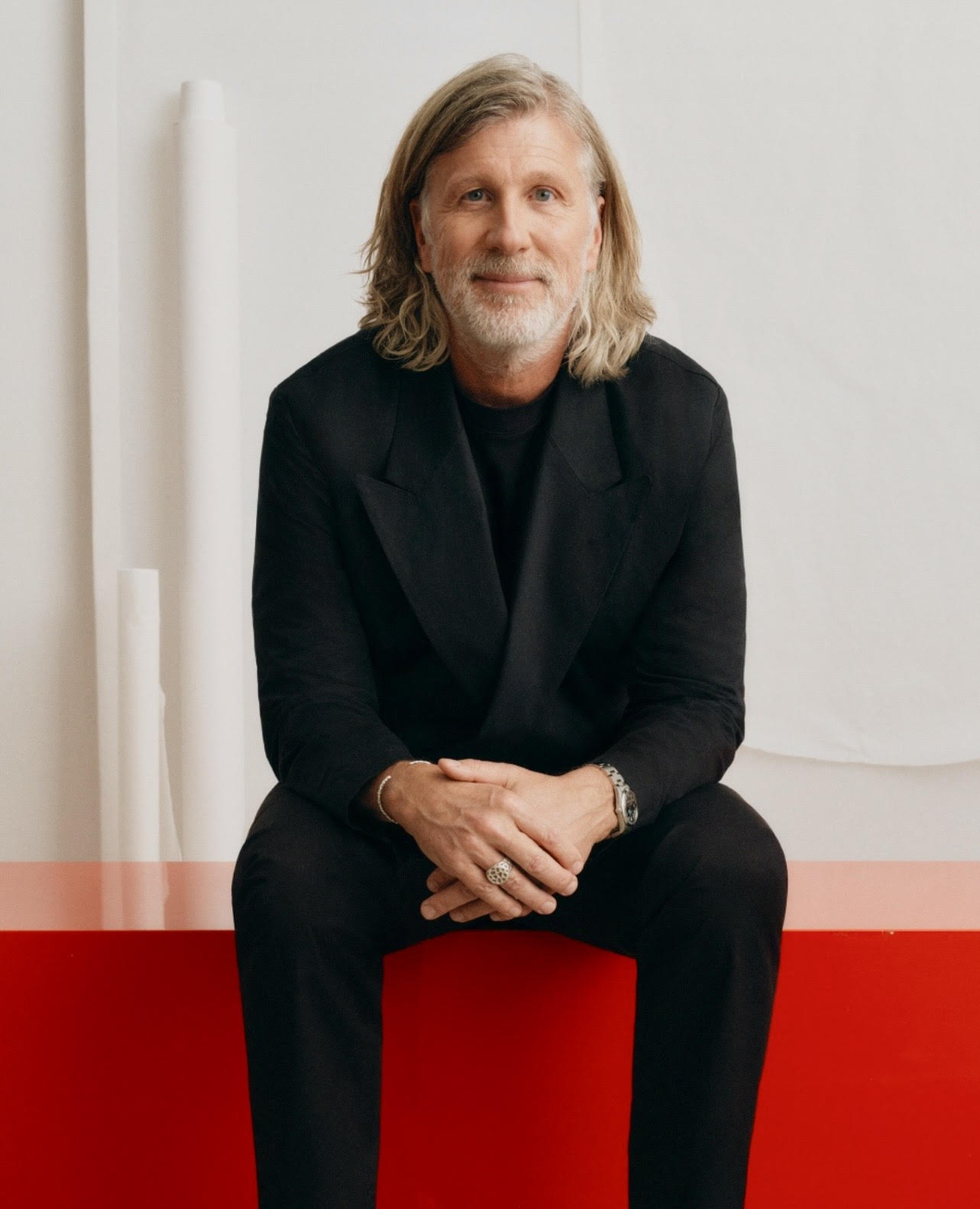
Jörgen Andersson, Chief Creative Officer at H&M
Jörgen Andersson, Chief Creative Officer of H&M, talks about his vision for the future where he sees the customer as the CEO.
"Only those brands that understand the essence of who they are, who embrace originality and bold ideas, will lead the future".
Key Takeaways:
Jörgen Andersson has helped redefine global fashion by democratizing design through bold collaborations and purpose-driven innovation.
At H&M, he leverages scale as a creative advantage to advance inclusivity, circular fashion, and ethical retail strategy.
Strong brands succeed through integrated brand experiences through products, culture and communication, not isolated campaigns.
Andersson views creative technology and AI as accelerators of human imagination—not replacements for creative leadership and intuition.
From H&M to Uniqlo: Career-Defining Moments in Brand Transformation
Jörgen Andersson is a global fashion executive, currently serving as Chief Creative Officer at H&M, where since December 2022 he has spearheaded a major creative relaunch, shaping the brand’s global vision, identity and design direction.
With a creative career that began at H&M in 1990 — rising through product, brand, and marketing roles — Andersson later held senior leadership positions at Esprit and Uniqlo / Fast Retailing, and has since combined advisory, investment and entrepreneurship with strategic creative leadership.
His work sits at the intersection of brand transformation, retail strategy, sustainable innovation, and now — increasingly — technology-driven creativity (including generative-AI and “digital twin” initiatives at H&M).
Q&A with Jörgen Andersson
Democratizing Fashion Through Collaboration and Innovation
Burō Talent (BT): You’ve had an impressive career, including time outside H&M, at Esprit and Uniqlo. Can you think of a significant moment of creative or strategic disruption that changed your perspective on brand building?
Jörgen Andersson (JA): My first transformative experience came during my years at H&M, more than 20 years ago, when we began exploring designer collaboration. The idea stemmed from our desire to express H&M’s core mission, fashion and quality at the best price, and, importantly, to democratize fashion for the many.
If luxury traditionally serves 1% of the global population, our ambition at H&M was to serve the remaining 99% or ideally, all 100%. The first collaboration with Karl Lagerfeld fundamentally took the fashion industry by surprise. It was unprecedented for a high-end designer to partner with a mass-market retailer and creative pieces at accessible prices.
The campaign revolved around a single question; “Is it true?”, because that was what everyone was asking: editors, stylists, industry insiders, and consumers on the street. Was Karl Lagerfeld really designing for H&M? And the answer, of course, was “yes.” That moment broke existing norms and proved to be truly disruptive. It not only changed fashion, but also set a precedent for cross-brand collaborations across other industries, all where one plus one could equal three. Today, collaborations are almost standard practice, but back then, it was revolutionary.
My second major experience was during my time with Uniqlo working closely with Tadashi Yanai. I learned a tremendous amount from him, particularly his approach to redefining the fashion industry. While traditional fashion emphasizes trends and seasonal collections, Yanai wasn’t interested in that.
I often describe his vision as a fusion of Nike and Apple. Nike brings material innovation and a deep understanding of athletes and their needs; designing apparel to support and improve performance. Apple, after Steve Jobs’ return, focused on a succinct range of hero products, The iPhone, iPod, iPad and each version continuously refined and improved.
This philosophy is rooted in the Japanese “Kaizen” mindset: constant improvement. At Uniqlo, this translated into product innovation, whether Heattech, AIR sim, or Ultralight Down, all within the LifeWear concept: functional, essential products designed to support everyday life for the many people.
Instead of designing solely for athletes, we designed for people everywhere and keeping them warm, cool, comfortable, and prepared. Whether it was a down jacket that packs into a handbag for a chilly Singapore office, or Heattech to survive a Swedish winter, the approach focused on solving real needs.
These two experiences, designer collaborations at H&M and LifeWear innovation at Uniqlo were both pivotal for me. Both challenged existing conventions, shifted how the industry thought about fashion, and created new paths forward. They represent transformative moments that deeply influenced how I view purpose-driven innovation within fashion.
Human-Centered Retail Strategy at Global Scale
BT: In the industry, you are known as a kind and caring individual. You said you want to liberate the fashion industry from overproducing too many products, to initiate a Pre-Loved business, to establish fair price, promote diversity, fight conformity and promote transparency, humanistic and ethical innovation. You said: “Everyone should have a seat on the bus”, which shows you have a heart and reminds us of the story of Rosa Parks. Can you talk about the challenges you had to overcome to create these human-centered initiatives in high volume retail businesses where sales and profit is paramount?
JA: I actually grew up promising my grandmother that I would become a doctor and instead, I ended up in the fashion industry. In many ways, I’ve spent my career trying to make sense of that shift: how I could use fashion as a force for good, both for people and for the planet.
For me, fashion is more than clothing. It’s a vehicle for self-expression and a universal language that helps people define who they are. Everyone deserves that right regardless of where they live, their background, their gender, their beliefs, or their style. I’ve always believed that self-expression is a human right, and fashion plays a powerful role in enabling it.
That purpose has guided my work at large companies. One reason I returned to H&M, beyond my love for the brand was the scale. When you operate at that size, you can drive real impact. Whether it’s reducing overproduction, accelerating circularity and pre-loved initiatives, or supporting innovation that can reshape our industry, scale becomes a tool for meaningful change.
Being at the Board of Directors of the H&M Foundation and working with the Global Change Award, I’ve also had the privilege of helping identify and support young entrepreneurs who are reimagining how we produce, sell, and recycle fashion. Investing in those ideas is one way to help transform the industry from within.
I sometimes think that this is simply my way of fulfilling that early promise, not through medicine, but by using my skills to contribute positively, wherever I am. No matter what field we choose, each of us can use our unique expertise to make a difference.
Historically, fashion often positioned itself on a pedestal and dictating what people should wear. But that has changed. Today, the industry is increasingly human-centered and inclusive, grounded in understanding people rather than prescribing to them. And that evolution is what motivates me: using fashion not only to help people express themselves, but to help build a more equitable, responsible industry for the future.
Growing Up Curious: The Making of a Chief Creative Officer
BT: Can you tell us a little about yourself how you grew up, why you started your career in design and fashion and what motivated you to become such a humanistic thinker in this highly competitive and often fickle world of fashion?
JA: I grew up just outside Stockholm with my father and sister. My path into fashion wasn’t planned. When I was 18 and doing my military service, I needed some extra pocket money and started working in an H&M store. I continued working there while studying economics and business administration at university. So in many ways, my career began by coincidence.
But even before that, fashion had always interested me. As a teenager, I was drawn to both music and clothing, both powerful ways for young people to explore identity. You experiment, try different styles, and figure out who you are. That curiosity made fashion feel natural to me, and as a young Swede, H&M was a brand that made sense: democratic, creative, and accessible.
What kept me in fashion was the feeling that it’s a living expression of society. It reacts quickly to what’s happening in culture like art, music, politics, and it keeps you close to people. I’ve always liked that in this industry, you’re never better than your last collection. It keeps you humble and curious.
As for what shaped my humanistic approach, I think it comes from both my upbringing and my personality. Sweden has a long tradition of social democracy, or simply humanism, where we’re taught to care for one another and see progress as something we achieve together, not alone. That mindset has deeply influenced me.
I also lead with my heart. I’ve always believed that empathy, kindness, and understanding should guide how we build brands and products. Fashion can sometimes be seen as a tough, exclusive world, but I believe it should be inclusive, giving everyone the right to express themselves and feel seen. For me, that is the real power of fashion: helping people find confidence, identity, and belonging.
So although I didn’t become a doctor like I once promised my grandmother, I still try to contribute in a meaningful way by helping build a more human, responsible, and expressive fashion industry.
BT: Brands that have a holistic approach toward a fully integrated brand strategy across all digital and traditional touchpoints are most successful in engaging their customers. Have you experienced situations where executive decision makers believed that a smart and expensive ad campaign was all you needed to attract customers and 360° brand design was an afterthought?
JA: Earlier in my career, I often came across the belief that a strong and expensive ad campaign could solve almost anything. The thinking was: “Just launch a big campaign and customers will come.” At that time, the power of integrated brand building wasn’t always fully understood.
But the world has changed. Today the media landscape is highly fragmented and every channel has its own language, context, and audience behavior. You can’t create one piece of content and expect it to work everywhere. What resonates in print will not automatically resonate on TikTok, Instagram, or in-store.
That’s why a holistic 360° approach is so important. Everything must be anchored in a strong central idea or purpose and then brought to life through tailored executions across each touchpoint. Each piece needs to feel native to its platform, while still telling a coherent and consistent brand story.
I would say that in the past there was more overconfidence in marketing and advertising as “the solution.” But today, most executive leaders I work with understand that brand building is about the total experience and product, service, experience, communication and culture all aligned. Advertising can amplify, but it cannot compensate for a weak or fragmented strategy.
The real magic happens when the brand idea is carried through every channel, consistently and creatively. That’s when customers truly engage and not because of one great ad, but because everything adds up to a meaningful, compelling whole.
Creative Technology, AI, and the Future of Fashion
BT: Li Edelkoort believes that if a future in which robots and AI do all the work comes to pass, creativity can help us find reasons to live. What are your thoughts on this and do you share her sentiment? And how do we ensure that the AI revolution is an enhancer of human creativity in fashion, rather than a replacement for it?
JA: I agree with Li Edelkoort’s belief that human creativity will become even more important as AI develops. For me, the question is not human creativity versus AI, but human creativity with AI. It’s not man against the machine, it’s man and machine.
AI can enhance our creative process, but it still needs direction. A machine can process, combine, and generate, but it doesn’t feel, dream, or develop a point of view. That is what makes us distinctly human. So our role is to stay in the driver’s seat and to guide the technology, shape it, and use it as a tool to explore ideas even further.
This moment also pushes us to reflect on what our creativity is for. If AI can help us achieve the same output in half the time, that’s exciting as it frees space for deeper thinking, exploration, and human connection. The real question becomes: What will we do with that additional time? That’s where meaning lives.
Like any major shift, AI can be scary if we don’t learn how to control it. But once we understand how to use it responsibly, it can absolutely serve humanity rather than replace us. I often think of it as a train arriving at the station: The key is to get on board.
Find your seat, define your role, and ensure you are driving, not just riding along. If you stay on the platform, you risk being left behind.
To ensure AI enhances creativity in fashion, we must:
Keep humans in the decision-making seat — the “creative cockpit.”
Use AI to support and accelerate ideas, not to replace imagination.
Bring strong human values, emotion, and intention to the process.
Invest in education so that creative teams know how to work with these tools.
If we do that, AI can be a powerful amplifier of creativity, helping us as creatives to dream bigger, explore faster, and free up more time for the deeply human work: storytelling, intuition, imagination, and meaning-making.
In that sense, yes, I share Edelkoort’s sentiment. AI will not make creativity less relevant; it will make it more precious than ever.
Intuition vs. Metrics: How Great Creative Leaders Decide
BT: Yasmin Sewell (at Business of Fashion Voices) said that “Business thrives on metrics, and intuition and creative energy doesn’t fit neatly into a spreadsheet or a report. But ironically, some of the biggest breakthroughs come from a gut feeling or an instinct.”
Do you agree with that observation and if so, can you talk about some breakthroughs you had or new initiatives you created based on your own instinct and curiosity?
JA: Yes, I agree with Yasmin, with one nuance.
Some of the most meaningful breakthroughs in my career have started from intuition. But intuition is often misunderstood. It’s not just a mysterious gut feeling, it’s grounded in experience, observation, and pattern recognition. So while it may feel instinctive, there is a science behind it.
A great example is H&M’s first designer collaboration with Karl Lagerfeld. There was no historical precedent or spreadsheet that proved it would work. It simply felt right, culturally, creatively, and emotionally. The instinct was that high fashion and high street could come together to democratize style. At the time, it was considered risky, even provocative but yet it reshaped the industry.
Another example is work at Uniqlo that contributed to the LifeWear philosophy. Those ideas came from observing people’s lives, sensing unmet needs, and letting curiosity lead, long before the data confirmed them.
But while I trust intuition, I also believe in testing it. I’ve always been interested in how we measure whether an instinct actually delivers value, whether it’s “on point” for the business and for the customer. In retail, we are very good at tracking conversion, traffic, and basket size. But emotional qualities like trust or inspiration are also measurable, we just need smarter tools and KPI’s.
This balance reminds me of something Erling Persson, H&M’s founder, used to say: You need both the circle and the square. The square represents logic, analysis, metrics; The circle represents creativity, instinct, imagination.
He believed creativity should always lead. At H&M, he said, the circle should always hold at least 51% of the votes, while the square holds 49%. I love this. In a creative business, ideas must guide, but they must be supported by structure and logic. Creativity without measurement remains just creativity; with balance, it becomes a powerful business engine.
And I don’t think people are purely circle or purely square. Our minds hold both logic and emotion, structure and imagination. Innovation happens when the two work together.
So yes, I deeply agree that intuition can lead to breakthroughs. But the strongest breakthroughs happen when instinct, curiosity, and measurement connect and when creativity is both felt and understood.
That balance is where true innovation lives.
Leadership Lessons and Advice for the Next Generation of Creatives
BT: What is the best advice you have ever been given by a mentor or someone you looked up to in your career?
JA: One of the best pieces of advice I’ve ever received came from a mentor more than 30 years ago. She used a simple image to explain how to approach difficult decisions in life, both personal and professional.
She said:
Imagine a glass of water. Now pour sand into it and begin to stir.
The more you stir, the cloudier the water becomes. You can’t see anything clearly. But if you stop stirring and give it time, the sand slowly settles to the bottom and the water becomes clear again.
Her point was that you cannot rush clarity. When you try to force an answer, you risk choosing the wrong path simply because things are still unclear. Sometimes the wisest thing to do is wait, to reflect, maybe sleep on it, allow thoughts and feelings to settle.
I remember asking her, “But how do I know when the water is clear?”
She just smiled and said, “When you know, you know.”
That advice has stayed with me throughout my life. I’ve returned to it many times, giving myself space to think, to observe, to let emotions settle before making decisions. And every time, once the clarity arrives, the decision feels intuitive and grounded.
It taught me patience. It taught me trust. Trust in timing, in experience, and in intuition. And it taught me that the right answers almost always reveal themselves when we stop trying to force them.
BT: Lastly, what would be your own personal advice you would share with today’s new generation of creatives?
JA: My advice to the next generation of creatives is simple: Stay radically curious.
Curiosity is the fuel of creativity so always ask “What if?”
Flip things around, look at them from new angles, and question your own assumptions.
Curiosity keeps your mind open and helps you see possibilities that others overlook. The moment you stop being curious, you risk losing your creative spark.
And just as importantly, be kind to yourself. Sometimes you will win, sometimes you will lose. That’s normal. Creativity isn’t a straight line; it’s a long journey. What matters is that you keep learning, keep exploring, and keep growing.
So stay curious, stay open, and remember that every experience, whether success or failure, is just life moving you forward.
.svg)



.svg)

.svg)
